
You know the job before the day starts. The machine has to get onto a muddy pad without tearing up turf, the trailer has to handle uneven ground without drama, and the load can't arrive scratched, shifted, or delayed. That's where ANTS Trailers official stands out, because the brand is built around the realities that make standard equipment trailers frustrating on a real site.
ANTS Trailers says its trailers are made in the USA, with a focus on high-quality, durable, and versatile performance. That matters when the workday includes low-clearance equipment, bulk material, and job sites where the ground changes from one minute to the next. The difference shows up in geometry, not marketing language.
Table of Contents
- Why ANTS Trailers Stand Apart on the Jobsite
- Complete Model Breakdown and Performance Specifications
- Matching the Right Trailer to Your Industry
- Financing Options and Long-Term Support Infrastructure
- Real-World Outcomes and Operator Testimonials
- Frequently Asked Questions and Next Steps
Why ANTS Trailers Stand Apart on the Jobsite
A crew shows up to a rough site with a compact machine on the back and two problems appear at once. The ramps are too steep for the equipment, and the ground is too soft or uneven to trust a standard loading setup. That's where a trailer either helps the day or slows everything down.
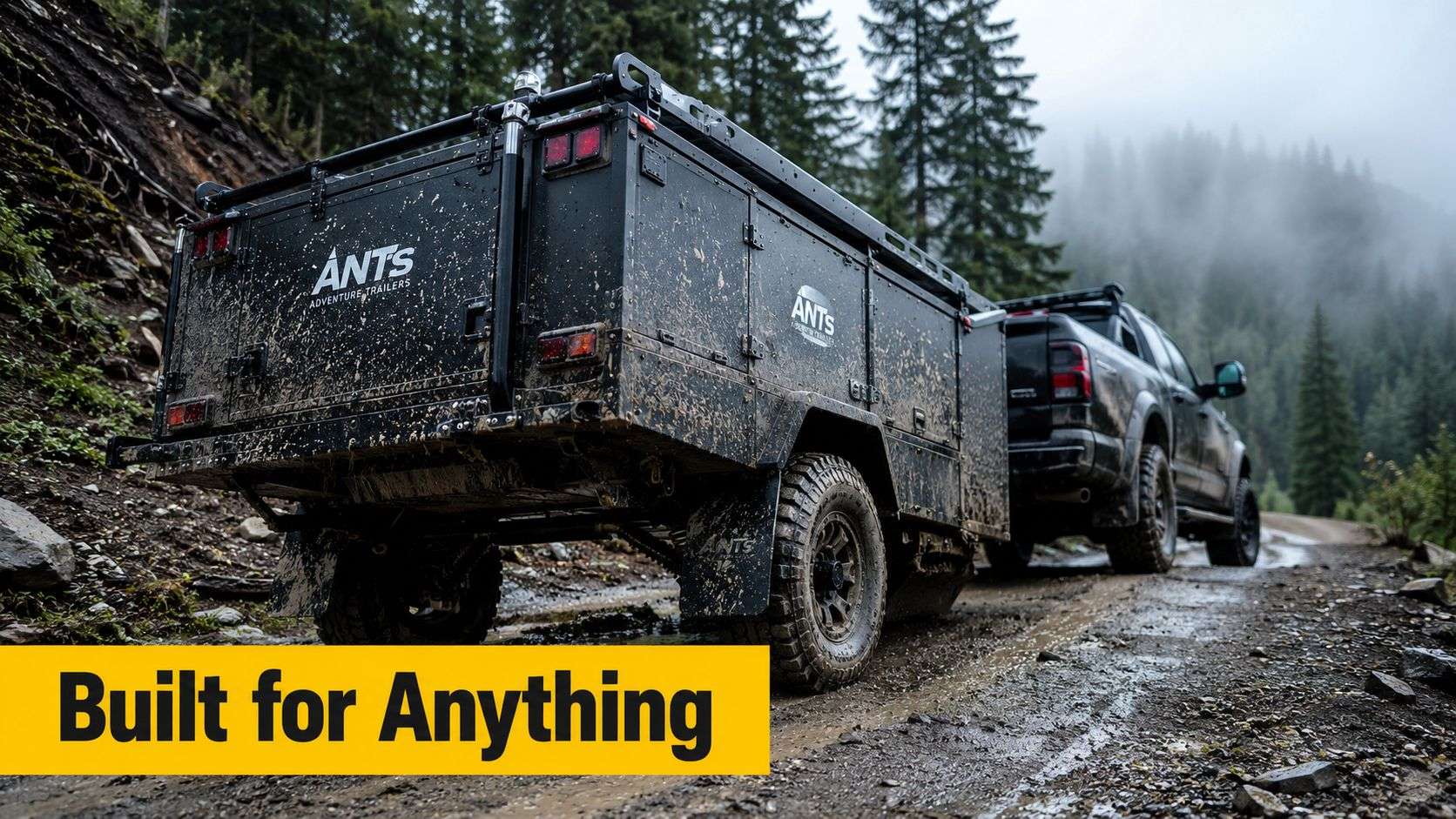
ANTS Trailers positions its equipment around those exact pain points. Its own materials identify the company as a U.S.-based manufacturer in Baraga, Michigan, and say the trailers are designed and manufactured for durable, versatile performance. That shows up in the lineup's terrain-aware geometry, including the ability to lower or raise the trailer and the presence of a conveyor belt trailer bed on the live bottom model, both of which are functions not found on ordinary flatbed-style setups.
Practical rule: if the trailer can't adapt to the site, the site will force the adaptation, usually with more labor and more risk.
That's why ANTS Trailers makes sense for buyers who care about workflow, not just payload. A low-clearance machine shouldn't need a fight to get on the deck. Bulk material shouldn't have to be dumped in a way that compromises safety under overhead obstacles. And a trailer should be able to arrive on a rough pad and still sit square enough to load without drama.
For buyers who manage brand presence along with equipment, even small details matter. A practical way to keep trailer identity consistent across units is to review veteran-friendly decal shop options when you're planning fleet graphics, unit numbers, or service decals.
The broader point is simple. ANTS Trailers doesn't just add features, it solves jobsite geometry problems. That's the key separator between a trailer that carries equipment and a trailer that helps crews work faster and safer.
Complete Model Breakdown and Performance Specifications
A trailer can look right on paper and still be wrong for the job if the geometry fights the loading process. The numbers here matter because they affect approach angle, deck behavior, and how much strain the crew puts on machines, tires, and ramps. ANTS Trailers organizes the lineup around those details, so the practical question is not just capacity, it is how the trailer behaves on rough ground, on a slope, and under a low-clearance load.
The 14/16 Live Bottom is built for controlled unloading
The 14/16 Live Bottom uses a walking conveyor floor powered by a gas engine and hydraulics, and ANTS says it can kneel and tilt to adapt to load and terrain conditions (official live bottom trailer video, product page). That matters because live-bottom hauling is often less about brute capacity and more about keeping material moving in a controlled way when the site itself is uneven or restricted.
Dealer inventory listings show a 14,000 lb GVWR, 7,000 lb axles, and a 9,360 lb payload capacity, while the owner's manual specifies 235/80R16 tires inflated to 90 psi (owners manual). Those tire and axle details are not background noise. They shape how the trailer carries sustained floor-drive load and how much margin you have when the day gets rough.
For buyers checking the geometry details against their own machines, the drop deck trailer specifications page is a useful reference point for how ANTS presents bed and ramp setup across the lineup.
The 7/12X Drop Deck is compact without feeling small
The 7/12X Drop Deck is the model that fits a fleet that needs a smaller trailer footprint without giving up useful carrying ability. ANTS lists an empty weight of 2,660 lb, a load capacity of 5,340 lb, and an enclosed bed measuring 70.5 inches wide by 13 ft 4 in long (product information). That is the kind of layout that helps when storage space is tight and the trailer still has to do real work.
The geometry is what makes it different from a basic flatbed. ANTS lists a 3-degree load angle on the bed and 9 degrees on the ramp, with a 7,000 lb GAWR (7/12X Drop Deck page). In practice, that shallow approach reduces the hard breakover point that can hang up compact equipment, especially on jobs where the operator is loading in a hurry and does not want to fight the deck.
The 14/20X Drop Deck is the geometry play
The 14/20X Drop Deck shows why loading angle can matter more than a generic statement about toughness. ANTS highlights 3 degrees on the bed and 9 degrees on the ramp as its load geometry, which is the kind of setup that helps low-clearance equipment move on and off without scraping or hanging up (low-profile equipment trailers). That is a real advantage when the site surface is uneven or the machine sits low to the ground.
For fleet managers who care about unit identification and markings, the Creative Graphic Solutions compliance guide is a practical reference for keeping trailer labeling and display requirements clean. That kind of detail sounds minor until an inspection or yard audit turns into lost time.
ANTS Trailers Model Comparison
| Model | GVWR / GAWR | Empty Weight | Payload Capacity | Key Feature |
|---|---|---|---|---|
| 14/16 Live Bottom | 14,000 lb GVWR, 7,000 lb axles | Not listed in VERIFIED DATA | 9,360 lb | Walking conveyor floor, kneel and tilt |
| 7/12X Drop Deck | 7,000 lb GAWR | 2,660 lb | 5,340 lb | Enclosed bed, low-load geometry |
| 14/20X Drop Deck | Not listed in VERIFIED DATA | Not listed in VERIFIED DATA | Not listed in VERIFIED DATA | 3-degree bed angle, 9-degree ramp angle |
The models are not interchangeable just because they share the same brand. Each one solves a different loading problem, and that is where the value sits. The live bottom is for controlled material movement. The drop decks are for reducing the angle and awkwardness that make low-profile equipment harder to load than it should be.
Matching the Right Trailer to Your Industry
A trailer earns its keep on uneven ground, in tight yards, and during repeated loading cycles where small geometry details decide whether a machine rolls on cleanly or hangs up at the tail. ANTS Trailers fits that reality because the lineup is built around different loading patterns, not a single flatbed assumption.
Construction and rental fleets need angle control
For construction contractors and site managers, the 14/20X Drop Deck is the most practical choice when low-clearance equipment is part of the daily mix. As noted in the model breakdown, its 3-degree bed angle and 9-degree ramp angle keep the loading path shallow, which reduces the awkward approach that often causes machine hang-ups on steeper trailers. That matters with scissor lifts, compact excavators, and other machines that need a clean approach, not a fight with the ramps.
Rental fleets see a different payoff. Equipment comes and goes quickly, and every scuff or hard contact shows up later in repair time or resale value. A trailer with a flatter loading geometry helps the operator load with more control, and that usually means the machine leaves and returns in better condition.
Landscaping, earthworks, and forestry need unloading flexibility
The 14/16 Live Bottom fits crews that haul material as often as they haul machines. ANTS describes it with a walking conveyor floor, and the video shows a conveyor belt driven by a gas engine and hydraulics. That setup lets material move out in a controlled flow instead of dropping all at once. The model's ability to kneel and tilt gives it a real advantage on uneven ground, where level unloading is not guaranteed.
That kind of terrain-adaptive behavior matters in landscaping and earthworks, where loading and unloading often happen on pads that are not perfectly level. Forestry and logging crews can also benefit from the enclosed-cargo approach of the 7/12X Drop Deck when gear needs protection during rough-road transport.
The trailer that matches the site conditions usually outperforms the trailer that only matches the payload number.
Municipal and utility work needs compact control
Municipal crews and utility operations often need a trailer that can get in, unload quickly, and keep cargo protected. The 7/12X Drop Deck fits that pattern because of its enclosed bed and compact footprint. It suits repetitive work where exposed cargo and transport damage create avoidable delays.
For buyers who handle construction work specifically, the construction work trailers page is a useful internal reference because it organizes the lineup around job use instead of a loose spec list.
The practical choice is straightforward. Use the live bottom when the job calls for controlled material discharge, use the smaller drop deck when cargo protection and compact hauling matter, and use the ultra-low drop deck when low-clearance loading is the main constraint. That is how the lineup earns value across different trades.
For buyers who are planning financing at the same time as trailer selection, the SBA 7(a) loan requirements 2026 guide can help with the paperwork side of the decision.
Financing Options and Long-Term Support Infrastructure
A premium trailer purchase is never just about the unit price. Fleet buyers have to account for uptime, parts access, service support, and whether the payment schedule fits the way revenue arrives. That is where financing and after-sale support matter just as much as the frame itself.
Financing should track cash flow, not fight it
ANTS Trailers points buyers toward financing through Ascentium Capital, which gives contractors a way to structure payments around project cycles instead of draining working capital all at once (financing options). That setup helps when a fleet works through busy seasons, uneven contract timing, or equipment that needs to earn back its cost through repeated use.
If you are comparing outside loan programs as a benchmark, the SBA 7(a) loan requirements 2026 guide can help you sort through documentation and qualification steps before you apply anywhere. It does not replace a trailer quote, but it gives buyers a clearer view of the paperwork side of financing.
Dealer access and direct support reduce downtime
A growing dealer network matters because trailers are easier to buy with confidence when a local team can inspect, explain, and hand off the unit in person. For fleets, that means fewer surprises before the trailer goes into service. Manufacturer-direct support also matters because parts requests and troubleshooting do not have to pass through multiple middlemen.
A service call gets expensive when it turns into a waiting game.
That point matters even more on live-bottom systems, where maintenance timing and parts availability affect whether the trailer stays productive or sits in the yard. Owners who keep a close eye on the owner's manual have a better basis for scheduling checks, ordering wear items, and keeping the unit within its intended operating window. The value is not a repeated tire figure, it is having the right service rhythm before small issues turn into missed work.
Ownership discipline keeps the trailer earning
For live-bottom units, routine checks should focus on the conveyor system, wear points tied to repetitive loading cycles, and the parts that tend to take abuse on rough jobsites. For drop-deck trailers, the focus shifts to deck condition, ramp function, and cargo restraint practices. The maintenance plan should follow the job pattern, not a generic calendar.
That also means planning ahead for parts turnover and service intervals. A fleet that knows where consumables, wear parts, and replacement components are coming from is less likely to lose a trailer to preventable downtime. The manufacturer's support approach makes sense from an operator's point of view. A trailer built to work hard should also have a support structure that keeps it working.
Real-World Outcomes and Operator Testimonials
The test happens at the ramp, on uneven ground, and at the end of a long shift. A low loading angle matters because it gives an operator a cleaner approach and reduces the chance of hanging up equipment on the way in. A walking conveyor matters because it changes how bulk material is placed, and a trailer that lowers or raises matters because most jobsites do not give you level ground on demand.
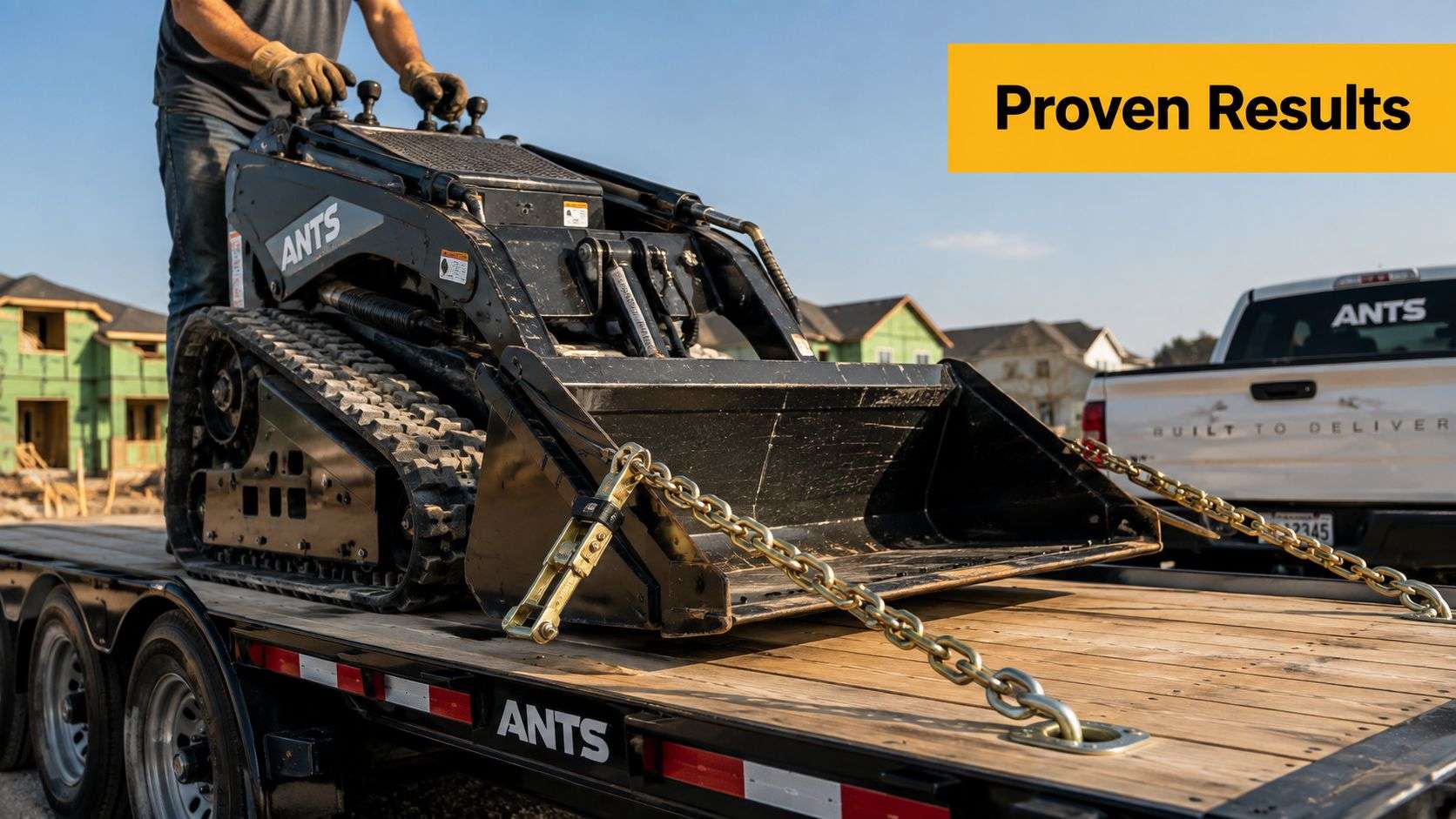
Crews usually notice the loading difference first. When the deck sits low enough, the operator spends less time forcing a machine up onto the trailer and more time lining it up and driving it on with control. On rough pads, that changes the pace of the whole setup. It also lowers the pressure on the person spotting the load, which matters when visibility is poor and the ground is inconsistent.
What operators care about most
- Loading confidence: A shallow approach angle makes low-clearance equipment easier to move without dragging or hesitation.
- Material control: A conveyor floor gives the operator control over discharge instead of depending on a sudden dump action.
- Cargo protection: An enclosed bed keeps valuable gear more secure during transport over rough roads or active jobsites.
- Terrain flexibility: Kneel-and-tilt behavior helps the trailer settle into uneven sites without forcing the crew to improvise around the slope.
Landscaping and earthworks crews usually talk about the Live Bottom in a different way. The value is not just that it moves material, it is that it moves it in a controlled stream that fits tight access points and uneven conditions. In one field account shared by a Michigan landscaping crew, the unloading process became noticeably faster after they switched to the 14/16 Live Bottom because they no longer had to wrestle bulk material out in awkward stages. That kind of feedback lines up with what operators want on busy sites, less fighting the load and more control over where it lands.
The trailer earns its place when it cuts one awkward step out of the day and does it repeatedly.
Equipment rental companies often judge a trailer by how much damage it helps avoid. The 7/12X Drop Deck fits that role well because its lighter frame, useful carrying margin, and enclosed bed help protect compact assets during transport. For fleets moving customer equipment between jobs, the practical benefit is simple, fewer scuffs, less shifting, and less time spent cleaning up avoidable transport damage. The official product information also reflects that this model is intended for secure hauling rather than loose, open transport.
The broader lesson is geometry, not just capacity. Faster loading, cleaner unloading, and better behavior on uneven ground all affect the workday in ways a spec sheet does not fully capture. Fleet buyers care about those outcomes because they shape uptime, reduce rework, and keep the trailer earning instead of waiting on the edge of the site.
Frequently Asked Questions and Next Steps
The first question buyers usually ask is how much attention the kneel-and-tilt setup needs in day-to-day use. The practical answer is routine inspection and disciplined operation. Check the moving points before a haul, keep the hydraulics and wear surfaces clean, and do not treat the trailer like a static flatbed. The maintenance guidance tied to the live bottom system makes it clear that this is a machine built around service and setup, so the crew running it has to stay ahead of wear instead of waiting for a problem to show up.
Another common question is what to expect from the live bottom floor in the field. The useful answer is not the catalog description, it is the way the trailer handles material that has to come off under control. A walking floor works well when the site is tight, the ground is uneven, or the crew needs a steady discharge rather than a sudden dump. If the load bridges, hangs up, or starts feeding unevenly, slow the system, clear the issue, and keep the discharge path open before the pile builds against the trailer.
Towing and matching the trailer to the truck still come down to the core job. The trailer has to fit the truck, the load, and the route, especially where grades, soft shoulders, or short access points make a small setup mistake expensive. The lighter 7/12X Drop Deck leaves more room for usable payload within its own envelope, while the 14/16 Live Bottom needs to be judged as a heavier-duty hauling tool with its own load limits and operating margin. I would also look at how often the trailer will be loaded at odd angles, because that is where geometry matters more than brochure language.
If a fleet buyer wants the next step, the right move is to talk with ANTS Trailers about dealer availability, demonstrations, service support, and financing that fits the way the trailer will be used. Ask for the local contact who handles service questions as well as sales questions. That keeps the conversation on maintenance, access to parts, and whether the trailer can be supported where the work happens, not just where it was purchased.