
A lot of crews buy a trailer the same way they buy a shovel. They look at price, deck length, and what's in stock. Then the job starts, and the problems show up fast. The ramp angle is too steep for the machine. The tool layout wastes ten minutes every stop. Material sticks in the bed. Equipment shifts because the tie-down points were an afterthought. By the end of the week, the trailer isn't helping the crew move faster. It's slowing the whole operation down.
That's why custom work trailers matter. For a contractor, grounds contractor, municipal crew, or rental outfit, the trailer isn't just something you pull behind a truck. It's part of the workflow. It affects loading time, unloading safety, equipment protection, and how many labor hours get burned doing work by hand that the trailer should've solved.
Demand is moving that direction too. The global light car trailer market, which includes specialized custom work trailers, was valued at USD 1.99 billion in 2025 and is projected to reach USD 2.76 billion by 2034, with North America driving a large share of that demand, according to Fortune Business Insights' light car trailer market analysis.
Table of Contents
- Beyond the Standard Haul An Introduction
- Assess Your Mission Before You Build Your Trailer
- Decoding Specs and Innovative Bed Types
- Choosing Your Materials and Build Options
- Navigating Costs Financing and Compliance
- Ownership Maximizing Your Investment
Beyond the Standard Haul An Introduction
A generic trailer works fine right up until the day it doesn't. That usually happens on a muddy lot, a tight residential drive, or a site where the crew has to unload fast and clear out. If the bed height is wrong, if the cargo area wasn't designed around the actual load, or if the trailer can't handle repeated heavy cycles, the crew ends up compensating with labor, risk, and downtime.
That's the dividing line between commodity hauling and a purpose-built trailer. A custom trailer should solve a job problem. It should fit the machine, the material, the route, and the way your crew loads and unloads. If it doesn't do that, it's only custom in appearance.
A trailer that looks right on the lot can still be wrong for the job. The test is simple. Does it remove friction from the workday, or add it?
Most buyers start with the obvious custom features. More cabinets. Different paint. Extra tie-downs. Those matter, but they're not the highest-value decisions. The bigger gains usually come from function-first choices such as load height, unloading method, weather protection, and how the trailer behaves on uneven ground.
For crews handling bulk material, debris, compact equipment, or repeat deliveries, bed design changes more than convenience. It changes the whole loading sequence. A trailer that can unload in a controlled way or lower closer to grade can cut out awkward handwork and reduce the chance of damage during transfer.
That's the practical case for custom work trailers. They're not a vanity purchase. They're a tool for protecting margin, keeping crews moving, and avoiding the kind of field failures that cost more than the trailer ever did.
Assess Your Mission Before You Build Your Trailer
Most trailer mistakes happen before the order is placed. Buyers skip the hard questions, choose from what's available, and assume they'll “make it work.” That approach usually ends with overloaded axles, wasted deck space, poor balance, and a trailer that's always one step behind the job.
Manufacturers and industry guides consistently recommend a different sequence. Define the cargo envelope first, then calculate maximum loaded weight, then choose frame, suspension, and axle capacity so you don't under-spec the trailer. That guidance is laid out clearly in MaxBuilt Trailers' custom-built trailer resource center.
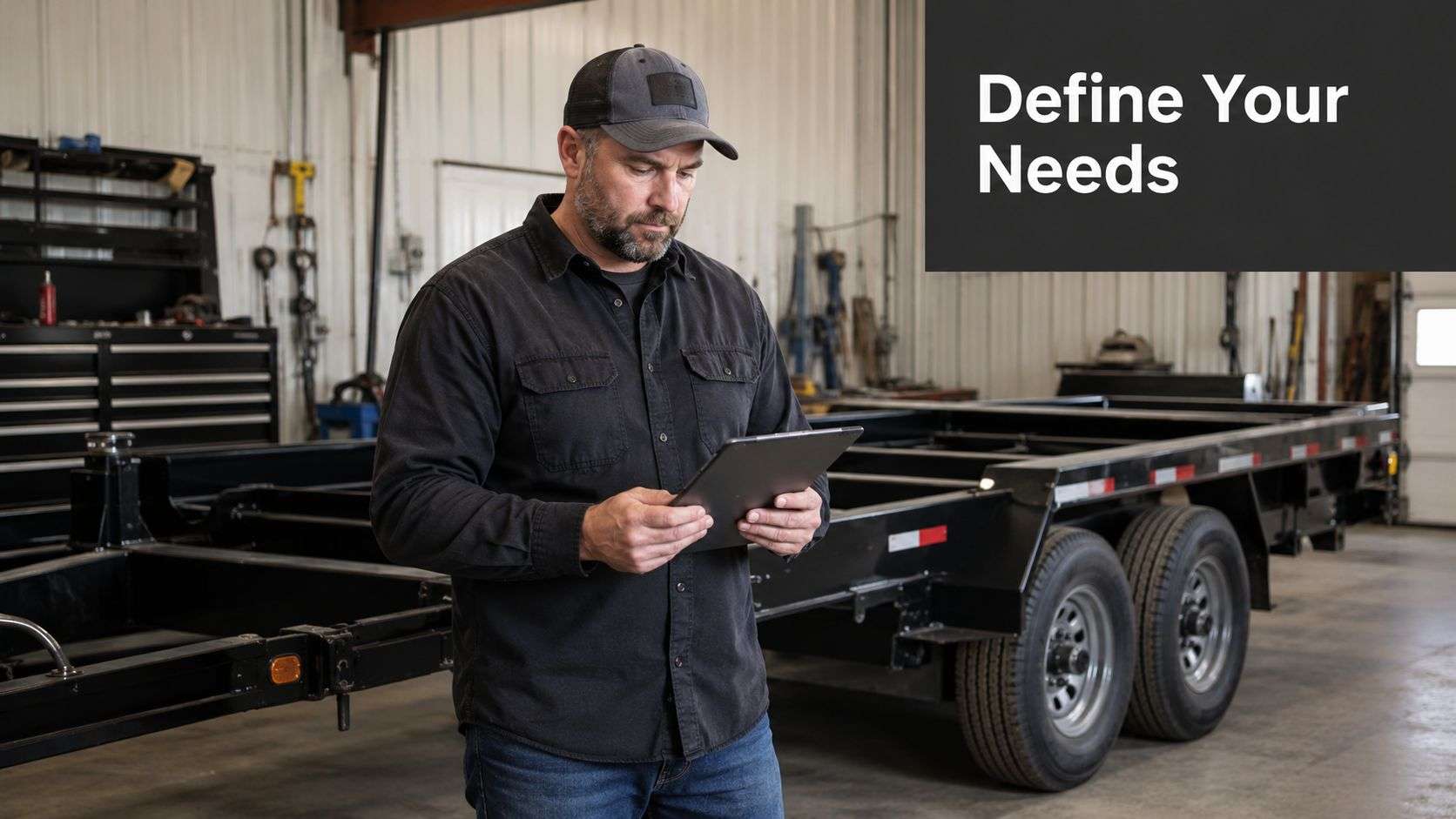
Define the load before you define the trailer
Start with what rides in the trailer on a normal day, not what might ride in it once a year.
Ask these questions:
- What are you hauling most often: Equipment, palletized materials, bulk ground materials, demolition debris, tools, or mixed loads all create different design needs.
- How big is the actual cargo envelope: Include ramps, bins, attachments, fuel cans, hose reels, toolboxes, and anything else that steals usable space.
- What does the load weigh when the day gets busy: Count fluids, accessories, spare parts, and the junk that always seems to get added after purchase.
- How is the weight distributed: A machine centered poorly or material piled behind the axle can tow badly even when the total weight seems acceptable.
That last point gets overlooked all the time. A trailer can have enough rated capacity on paper and still behave poorly on the road if the load path is wrong.
Match the trailer to the site, not just the highway
Road miles matter, but jobsite conditions matter more.
A paving contractor running mostly improved roads has one set of needs. A forestry operator crossing ruts, washouts, and steep grade transitions has another. A municipal crew may need repeated stop-and-go loading in crowded areas. A grounds maintenance professional may need cleaner unloading and lower manual handling around finished property.
Practical rule: If the trailer will spend its life entering rough lots, crossing curbs, or loading on uneven surfaces, ground clearance, load angle, and suspension behavior deserve as much attention as deck size.
Think through your bottlenecks:
- Loading delays caused by steep ramps or awkward approach angles.
- Unloading delays when material has to be shoveled, dragged, or tipped in a space that doesn't allow it.
- Damage risks from unsecured equipment, water intrusion, or poor interior layout.
- Operator fatigue from repetitive handling that better trailer design could reduce.
Build a mission profile before you request a quote
A good mission profile doesn't need to be complicated. It needs to be honest. One page is enough if it includes the essentials.
Use a checklist like this:
- Primary duty: Daily hauling, seasonal peaks, rental turnover, municipal service, or mixed commercial use.
- Typical route: Highway, city streets, back roads, unimproved access, or a combination.
- Loading method: Forklift, skid steer, hand loading, ramp loading, or conveyor-fed.
- Unload method: Rear discharge, side access, ground-level roll-on, or controlled material feed.
- Non-negotiables: Lockable storage, weather protection, low load angle, lighting, hydraulic function, or easy cleanout.
The crews that get the best results from custom work trailers usually aren't chasing every available option. They're clear about what the trailer must do every day without drama. That's what keeps the build on target and the money in the right places.
Decoding Specs and Innovative Bed Types
Trailer spec sheets can make a simple buying decision look more technical than it is. Strip away the jargon and a few terms drive most of the outcome: how much the trailer can legally and safely carry, how the weight sits over the running gear, and how the bed design changes the loading and unloading sequence.
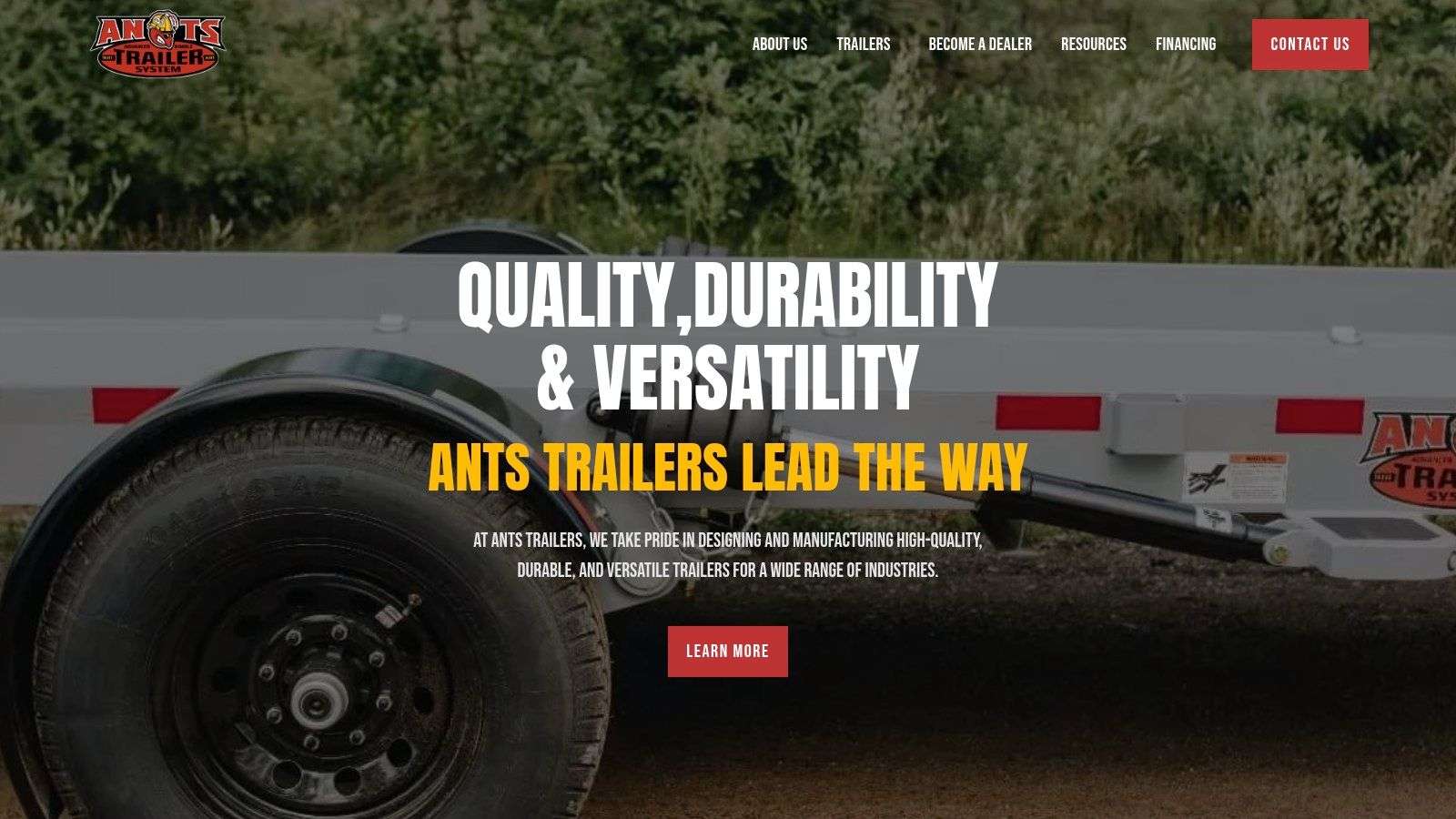
The screenshot below shows the kind of job-focused trailer configuration buyers are increasingly considering.
Start With Weight Terms That Actually Matter
GVWR is the maximum allowable weight of the trailer and its load combined. That's the ceiling you don't exceed.
Payload is what the trailer can carry after you account for the trailer's own empty weight. Heavy-duty features can improve function but also eat into payload if you don't plan carefully.
Tongue weight affects towing stability. Too little, and the trailer can sway. Too much, and you overload the tow vehicle's hitch or rear axle.
Axle rating tells you what each axle is built to support, but axle capacity alone doesn't mean the whole trailer is suited to your work. Frame strength, suspension setup, deck structure, and load placement still control how it performs in the field.
Buyers get in trouble when they shop by trailer length only. Length is easy to compare. Load path is what keeps the trailer alive.
Suspension choice matters too. Some operators prefer spring setups for straightforward serviceability in punishing conditions. Others want torsion behavior for different ride characteristics. The right answer depends on use, maintenance habits, and terrain.
Bed Style Changes the Work More Than Most Buyers Expect
A standard flat deck covers a lot of jobs. It's simple, accessible from multiple sides, and easy to adapt. But once the job involves repeated unloading of loose material or frequent machine loading at difficult angles, a conventional bed starts showing its limits.
That's where bed type becomes a real productivity decision.
| Bed Type | Primary Use | Key Advantage | Best For |
|---|---|---|---|
| Flatbed | General hauling | Open access and flexible loading | Mixed cargo and equipment |
| Enclosed bed | Tools and weather-sensitive cargo | Security and weather protection | Service crews and protected storage |
| Dump-style bed | Bulk material discharge | Fast unload where tipping clearance exists | Soil, gravel, debris |
| Live bottom conveyor bed | Controlled material unloading | Unloads without relying on a high tip angle | Tight spaces, overhead hazards, controlled spread work |
| Lowering drop deck | Equipment and heavy item loading | Reduced load angle and safer loading approach | Compact equipment, wheeled machines, sensitive loading conditions |
A live bottom conveyor bed solves a problem dump-style setups can't always handle. When overhead clearance is limited, ground conditions are poor, or you need material discharged in a more controlled way, conveyor-style unloading gives the operator more control. That matters on congested sites and anywhere tip-up unloading would be awkward or unsafe.
A lowering deck solves a different problem. If your crew loads compact machines, palletized equipment, or heavy rolling gear, reducing the load angle isn't a luxury. It changes whether the load goes on cleanly or becomes a risky maneuver.
One example in this category is ANTS hydraulic platform trailers. ANTS Trailers are made in the USA, and their product line includes work-focused designs such as a live bottom trailer bed with a conveyor system and models that can lower or raise to improve loading and unloading on demanding jobsites.
Pick the bed around the task sequence
A useful test is to walk through the job in order.
- Arrival: Can the trailer get into the site and position without extra maneuvering?
- Load-in: Can one operator load safely, or does the setup require spotters and repeated corrections?
- Transport: Does the trailer secure the load cleanly without awkward tie-down work?
- Unload: Can the operator discharge material or equipment without fighting the trailer?
If the answer breaks down at any of those stages, the wrong bed type is usually part of the problem. Custom work trailers deliver the most value when bed design matches the work sequence, not just the cargo category.
Choosing Your Materials and Build Options
A trailer frame is where optimism goes to die. If the structure is wrong, no amount of nice storage, clean paint, or upgraded trim will save it. Material choice and build options need to follow the actual workload, because every add-on rides on the frame and every hard stop, pothole, and twisted entry puts that structure to the test.
Industry guidance for enclosed builds puts the priorities in the right order. Trailer Showroom's guide to custom enclosed trailer features highlights weatherproofing, secure flooring, and lighting as core requirements, and it warns buyers to satisfy structural and payload needs before spending money on cosmetic or secondary upgrades.
Frame Material Is a Workload Decision
Steel still makes sense for a lot of commercial use. It's familiar, strong, and well suited to hard service when the trailer sees rough handling and repeated heavy loads. The trade-off is weight and corrosion management. If you run steel, you need to carefully consider coatings, wash routines, and how often the trailer will sit wet, dirty, or exposed to road treatment.
Aluminum appeals for a different reason. Lower trailer weight can help preserve payload, and corrosion resistance matters if the trailer lives outside or works around moisture. But the right answer isn't “steel good” or “aluminum good.” It's which material fits your hauling duty, service conditions, and repair expectations.
If corrosion protection is part of the discussion, it helps to review practical considerations around hot-dip galvanizing costs and trade-offs before settling on a finish strategy.
Build Options That Pay for Themselves
The best add-ons solve repeat problems.
- Integrated storage: Built-in boxes and cabinets keep chains, binders, hoses, and hand tools where the crew can reach them fast.
- Lighting where work happens: Interior lights, exterior work lights, and clear loading-zone visibility matter more than cosmetic trim.
- Flooring that matches the load: Secure footing and durable deck surfaces reduce slips and protect cargo.
- Tie-down points in the right places: A dozen badly placed anchors are less useful than a few that properly match your equipment footprint.
- Access hardware: Good ramp systems, doors, lift assistance, and grab points reduce strain and speed up the cycle.
Cosmetic branding should come after the structure, not before it. A trailer earns its keep by surviving the job, not by looking expensive in the yard.
That doesn't mean appearance has no value. If the trailer doubles as a rolling advertisement, clean branding can help. For teams planning decals or wraps, personalized vehicle graphics can make sense once the frame, coating, access points, and duty-critical hardware are already settled.
Good custom work trailers usually look plain at first glance. Then you notice everything is where it should be, the crew isn't improvising, and nothing important was sacrificed for appearance. That's the build standard worth paying for.
Navigating Costs Financing and Compliance
The cheapest trailer on day one often becomes the expensive trailer by year two. Buyers who only compare sticker price tend to miss the costs that show up later through repairs, downtime, compliance issues, and a trailer that doesn't fit the work well enough to replace labor.
Sticker Price Is Only Part of the Cost
Start with the base trailer, then add every functional requirement that changes the actual delivered price. That includes hydraulic systems, storage, lighting, brakes, finish protection, special bed designs, and any fabrication tied to your equipment footprint.
Then look past purchase price and think in terms of ownership cost:
- Maintenance exposure: Harder service cycles wear consumables and structures faster.
- Downtime risk: If a trailer failure idles a crew or machine, the actual cost goes beyond parts.
- Labor effect: A trailer that loads or unloads poorly can waste paid hours every week.
- Resale usefulness: Highly specialized builds can be excellent assets, but only if the specification matches a repeatable need.
That last point matters for public-sector and mixed-use fleets. A 2025 FHWA finding summarized here noted that trailers used in municipal public works can incur 28% higher annual maintenance costs than those used in commercial construction. If your fleet runs varied terrain, stop-and-go work, and stricter service demands, build that reality into your forecast before you sign.
Financing can help preserve working capital when the trailer will immediately support revenue or reduce operating friction. Some buyers prefer conventional equipment financing. Others want a structure tied to monthly cash flow. For a practical overview, review trailer financing options before choosing the purchase path.
Compliance Problems Are Expensive and Avoidable
A trailer can be perfectly capable on the job and still create headaches if it isn't set up for legal road use. Registration, licensing, towing limits, lighting, braking requirements, and state-specific rules all need to be checked before delivery, not after.
Keep the compliance review simple and disciplined:
- Verify tow vehicle limits against the fully loaded trailer, not the empty trailer.
- Confirm brake requirements based on the trailer's intended use and local rules.
- Check lighting and conspicuity so the trailer is road-ready on day one.
- Review registration and licensing before ordering a specialized build.
- Document the final spec so the fleet manager, operator, and service shop all work from the same information.
Compliance work feels administrative until the first roadside stop or insurance question. Then it becomes urgent.
A trailer should leave the yard ready to work and ready to travel legally. If the spec, financing, and compliance review are aligned upfront, ownership usually gets a lot less painful.
Ownership Maximizing Your Investment
Buying the trailer is only the first half of the decision. The second half is whether you'll keep it reliable enough to earn back the money. Most trailers don't fail because they were used hard. They fail because crews ignore small issues until those issues become structural, hydraulic, electrical, or brake problems.
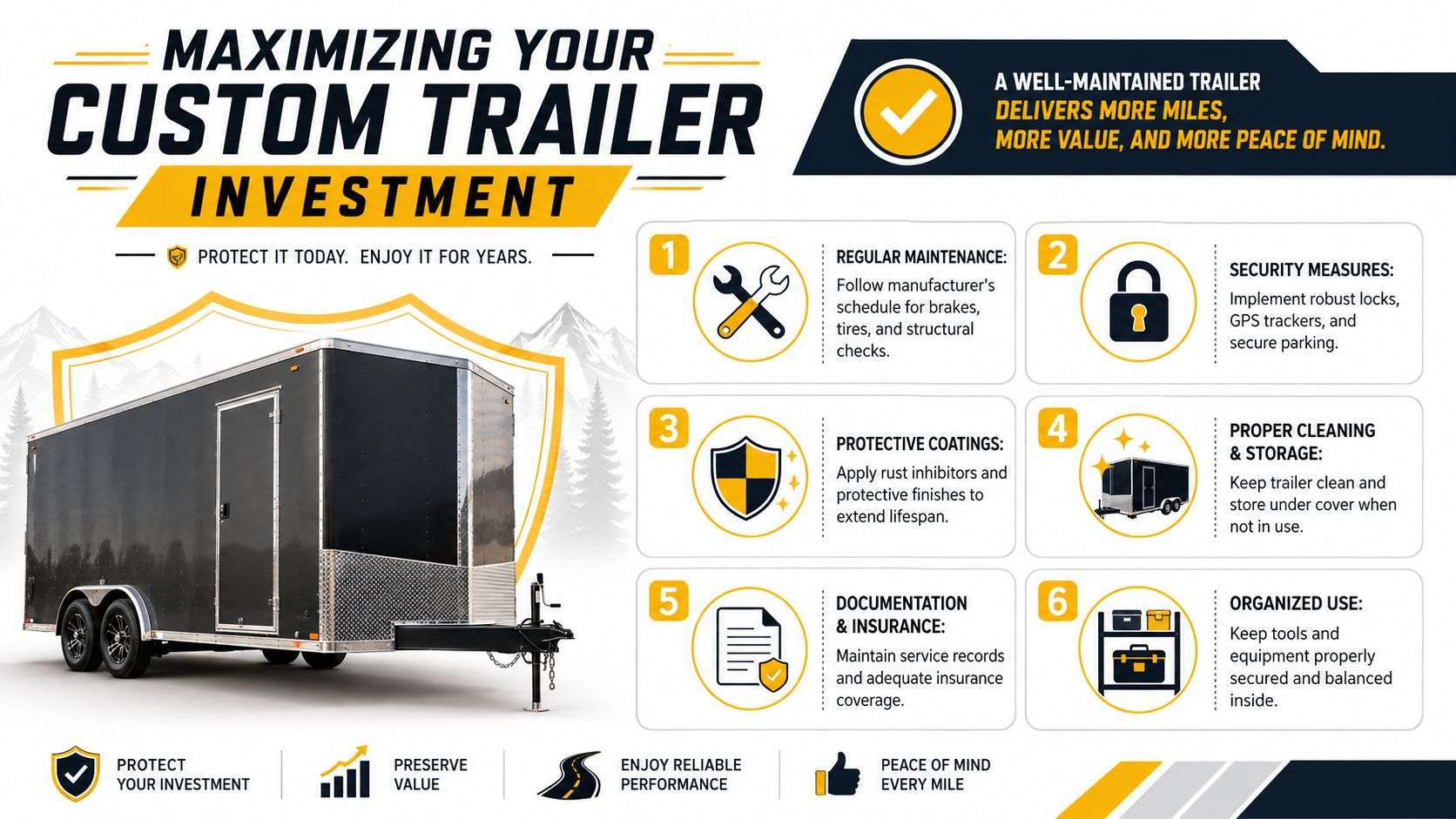
What to Check Before Every Dispatch
Daily checks don't need to be long. They need to be consistent.
- Tires and wheels: Look for visible damage, uneven wear, and hardware that doesn't look right.
- Brakes and breakaway components: Make sure the system is connected and functioning as intended.
- Lights and wiring: Confirm running lights, brake lights, and connectors before the trailer leaves.
- Coupler and safety gear: Check latch condition, chains, and attachment points.
- Hydraulic and moving parts: Watch for leaks, hose damage, slow movement, or unusual noises.
- Deck and cargo securement: Inspect tie-downs, flooring, ramps, and anything the load depends on.
A clean trailer is easier to inspect. Dirt hides leaks, cracked weld areas, loose fasteners, and floor damage. Crews that wash down trailers regularly usually catch problems earlier because they're seeing the machine.
For teams building a stronger maintenance routine around reducing equipment downtime, preventive scheduling is worth tightening up before the busy season starts.
Manufacturer Support Matters After Delivery
The practical value of a trailer supplier shows up when something needs a part, an answer, or a troubleshooting call while the job is waiting. That's especially true with custom work trailers that include hydraulic systems, moving beds, specialized ramps, or job-specific fabrication.
Keep records on each unit:
- Service history: What was repaired, replaced, adjusted, and when.
- Known wear points: Components that need closer inspection based on your actual use.
- Operator notes: Repeated complaints often point to a problem before a failure occurs.
Store the trailer with some discipline too. Park it level when possible, secure it, protect exposed components, and don't let wet material or debris sit in the bed longer than necessary. Small habits extend service life.
A custom trailer becomes profitable when it stays available, predictable, and safe. That doesn't happen by accident. It happens when inspection, cleaning, service, and support are treated as part of operations instead of an afterthought.
If your crew needs a trailer built around the job instead of adapted to it later, ANTS Trailers is worth a look. Their lineup focuses on worksite function, including conveyor-based live bottom unloading and trailer designs that can lower or raise for safer loading, which makes sense for contractors who need durability, control, and fewer workarounds in the field.