
You're looking at a load that has to move today, on ground that may not cooperate. The crew still needs the material placed cleanly, the trailer still has to stay stable, and nobody wants to spend the afternoon rehandling spoil, fighting a steep dump angle, or cleaning up a pile that landed in the wrong place. That's where an ANTS live bottom trailer changes the conversation, because it unloads bulk material with a conveyor floor instead of a raised body, and that difference matters most when the site is soft, uneven, or tight.
Table of Contents
- Why the ANTS Live Bottom Trailer Changes Jobsite Material Handling
- How the Walking Conveyor Floor and Kneel System Works
- Model Comparison and Key Specifications
- Primary Use Cases Across Construction and Landscaping
- Maintenance and Safety Guidance for Daily Operations
- Dealer Support and Financing Options
- Making the Right Purchase Decision for Your Operation
Why the ANTS Live Bottom Trailer Changes Jobsite Material Handling
The worst unloads usually happen when the trailer is in the only place it can fit, not the place you'd choose. I've watched crews back into a soft shoulder, realize the ground won't hold a raised bed, and then burn time trying to stage material by hand or with extra equipment. That's the kind of jobsite frustration a live bottom system is built to avoid.
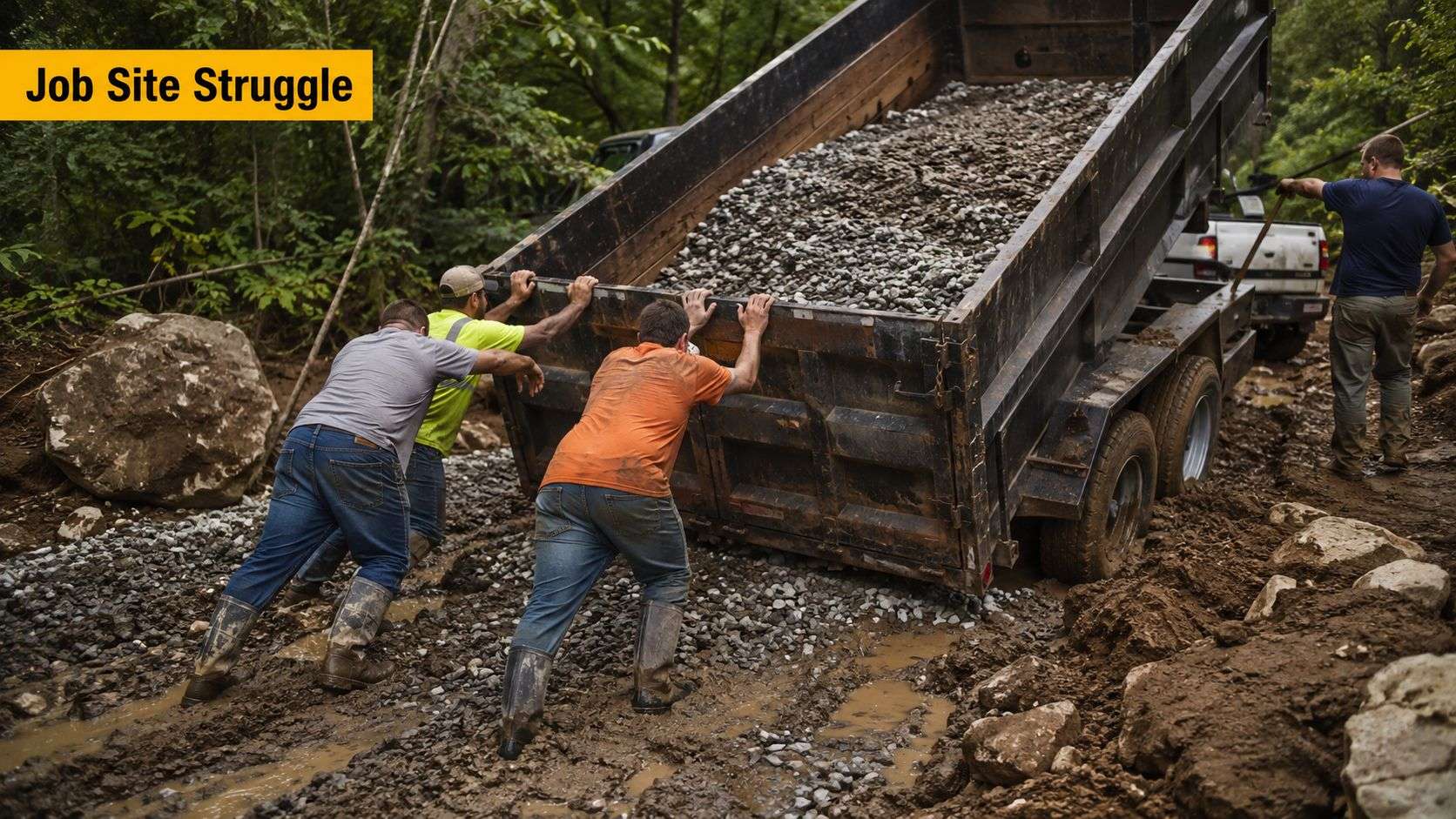
A different unload changes the whole job
A conventional dump trailer depends on a lifted body and gravity. An ANTS live bottom trailer moves material horizontally with a floor conveyor, so the trailer stays planted while the load comes out in a controlled stream. That matters on constrained sites because the operator isn't asking the ground to support a tall, shifting load.
ANTS Trailers are made in the USA, specifically manufactured in Baraga, Michigan, and their own materials position them as premium work equipment built for demanding jobsites rather than generic light-duty trailers, according to the company's owner's manual and product materials ANTS owner's manual. That fits the way the trailer is built and the work it's meant to do. You're not buying a box that only works on perfect ground, you're buying a hauling system for real sites where precision and stability matter.
Practical rule: if the trailer needs to unload where a dump bed feels sketchy, a live-bottom workflow is usually the safer choice.
The value isn't just safety for safety's sake. It's fewer rehandles, less spillage, and less time lost figuring out how to spread the pile after it's on the ground. The manufacturer's live-bottom guidance describes that controlled discharge as a way to handle bulk material without raising the trailer body, which is why it fits construction and landscaping work so well ANTS live-bottom trucks.
For operators, the advantage shows up in the rhythm of the job. Load, move, discharge precisely, keep going. That's a better fit than stopping to reposition a dump trailer, calling for help to clean up a sloppy drop, or waiting until the site conditions improve.
How the Walking Conveyor Floor and Kneel System Works
A live-bottom trailer makes more sense once you watch the material move instead of watching the bed lift. The trailer uses a conveyor belt built into the trailer floor to move bulk material in and out, and the bed can also tilt up and down for loading machines or materials YouTube demonstration. That is the practical difference from a traditional dump body. The load travels out under control, while the trailer stays planted on the ground.
The conveyor floor does the unloading
The conveyor floor functions as the moving surface under the load. Once the system is engaged, the belt carries material toward the rear opening in a steady stream instead of letting the whole load break loose at once. That matters with aggregate, soil, mulch, and similar bulk materials, especially when the goal is to place product where it belongs and avoid extra cleanup after the drop.
Buyers who want the mechanics laid out plainly can use the company's own plain explanation of the mechanism on what is a walking floor trailer. For day-to-day work, the point is the same. The operator gets controlled discharge, which helps around curbs, tight work areas, and sites where a full dump would land too hard or spread too wide.
On uneven or confined jobsites, that control changes how the crew works. A dump trailer often needs extra room, a safer angle, and a clean landing zone. A live-bottom setup can place material in a narrower lane, along a trench, or beside existing work without forcing the operator to raise a bed over unstable ground.
Kneel and tilt add loading flexibility
The other half of the system is the trailer's ability to lower or raise the deck. ANTS' own materials describe that function as part of the system, and it gives the trailer more flexibility than a standard hauler ANTS live-bottom guide. Lowering the deck reduces the loading angle, which helps when a machine needs a gentler approach. Tilt helps with machine or material loading when the ground is uneven or the approach is awkward.
The deck height adjustment is not a gimmick. It is what lets the trailer stay usable where a fixed-height load path would be awkward or unsafe.
That flexibility has a direct safety payoff. On soft ground, the crew can lower the trailer and reduce the chance of a sketchy approach. In tight spaces, the operator can keep the load path controlled instead of raising a dump body into overhead hazards or trying to swing material into a space that does not leave much margin. The ants live bottom trailer works like a jobsite tool, with fewer forced compromises when the ground or access gets difficult.
Model Comparison and Key Specifications
A trailer that fits the yard can become awkward on a jobsite fast. The ANTS 14/16 live bottom trailer is built for bulk material handling, while the 7/12X Drop Deck and 14/20X Drop Deck are aimed at different hauling jobs. Matching the trailer to the work matters because capacity, bed size, and loading angle change how safely the unit can be used in tight or uneven areas.
Side-by-side model view
| Specification | 14/16 Live Bottom | 7/12X Drop Deck | 14/20X Drop Deck |
|---|---|---|---|
| GVWR | 14,000 lb product specifications page | 7,000 lb | Not provided in the verified data |
| Empty Weight | 4,640 lb | 2,660 lb | Not provided in the verified data |
| Load Capacity | 11,460 lb ANTS owner's manual | 5,340 lb | Not provided in the verified data |
| Bed Dimensions | 80.5 in. wide x 16 ft. 4 in. long | 70.5 in. wide x 13 ft. 4 in. long | Not provided in the verified data |
| Load Angle | 17 degrees | Not provided in the verified data | 3 degrees on the bed, 9 degrees on the ramp from product guidance in the brief |
| Typical Role | Bulk material handling | Lighter-duty hauling | Equipment-focused hauling |
The 14/16 is the model that shows what a live-bottom setup is meant to do. Its 14,000 lb GVWR, 4,640 lb empty weight, and 11,460 lb load capacity point to a trailer designed for hard work, not just occasional use. That ratio matters in practice because the owner's manual says payload is calculated by subtracting empty weight from GVWR, and the material still has to fit the safe cargo volume and weight range for the job.
The 7/12X Drop Deck is a smaller, more compact option with an empty weight of 2,660 lb, a load capacity of 5,340 lb, and a 70.5-inch by 13 ft. 4 in. enclosed bed. A dealer inventory listing placed it around $18,500 with an MSRP of $19,500, which puts it in a work-focused price band rather than a basic utility category.
The 14/20X Drop Deck is the model to review when the main need is low loading geometry for equipment. If you are sorting through the lineup, the live-bottom trailer for sale page is the right place to check current configuration details. The practical decision is simple, choose the model that matches what you haul most often, because a trailer that works for equipment hauling is not automatically the right choice for bulk discharge.
Primary Use Cases Across Construction and Landscaping
The live-bottom system pays for itself in the moments where the site won't cooperate. That might be a rough excavation edge, a tight installation site, or a municipal shoulder with limited room to unload. The common thread is the same, the operator needs controlled delivery, not a pile that has to be reshaped after it lands.
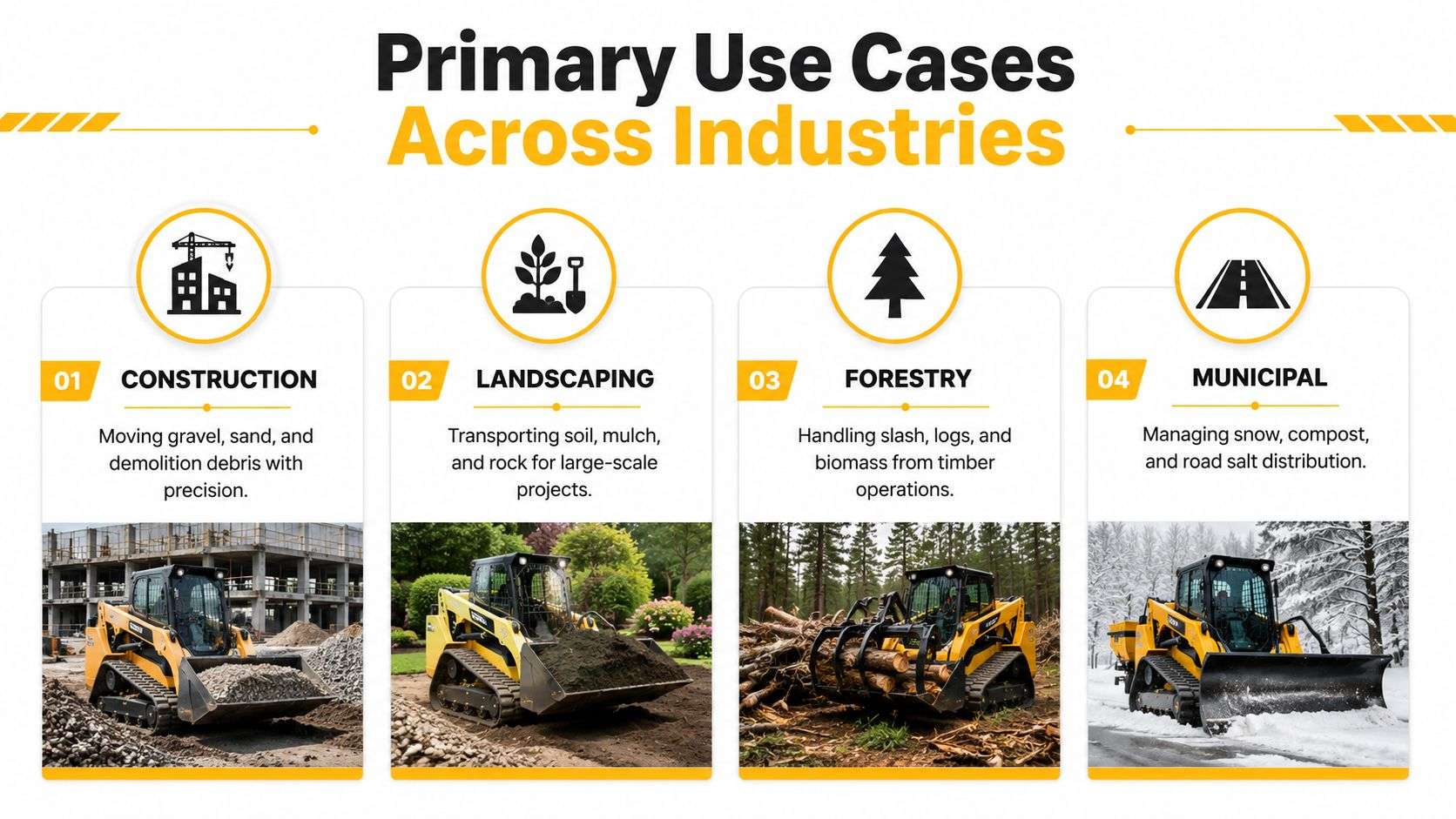
Construction work rewards controlled discharge
On construction sites, the biggest issue is often not hauling the material, it's placing it where the next crew can use it. A live-bottom trailer reduces rehandling, spillage, and slope risk on constrained or uneven sites because the conveyor floor lets the operator discharge without raising the trailer body ANTS live-bottom trucks. That matters when a site is narrow, when there's traffic nearby, or when the ground can't support a tilted body safely.
For drainage and site-prep work, precision is a real labor saver. A crew laying material near a trench line or along a retaining edge doesn't want to clean up a dumped heap and move it again. If you're also planning site drainage work, a practical reference like how to install a French drain system can help frame why controlled placement matters so much around grade-sensitive work.
Landscaping and municipal crews need placement, not just delivery
Landscapers often care less about gross speed and more about where each load ends up. Mulch, soil, and decorative stone need to be delivered with enough control that the material can be spread efficiently and doesn't spill into finished areas. The live-bottom floor supports that workflow because the material exits in a steadier pattern, which makes clean placement easier.
Municipal work has a similar need, especially where roads, shoulders, and public areas leave little room for error. The trailer's kneel and tilt functions add another layer of usefulness on uneven ground, because the crew can adapt the loading and unloading geometry without asking the site to become perfect first.
When the worksite is tight, the right trailer doesn't just move material. It reduces the number of times people have to touch it.
Forestry and land-management crews also benefit from controlled discharge on rough terrain, though their material mix can vary a lot. The key decision point is whether the site and material demand precision. If the answer is yes, the live-bottom workflow is worth a serious look. If the answer is mostly flat ground and general hauling, a simpler trailer may be enough.
Maintenance and Safety Guidance for Daily Operations
A live-bottom trailer rewards simple, consistent checks. The conveyor system doesn't need drama, it needs attention before small problems become downtime. Daily routine matters here because the machine's usefulness depends on the floor moving cleanly and the kneel system responding the way it should.
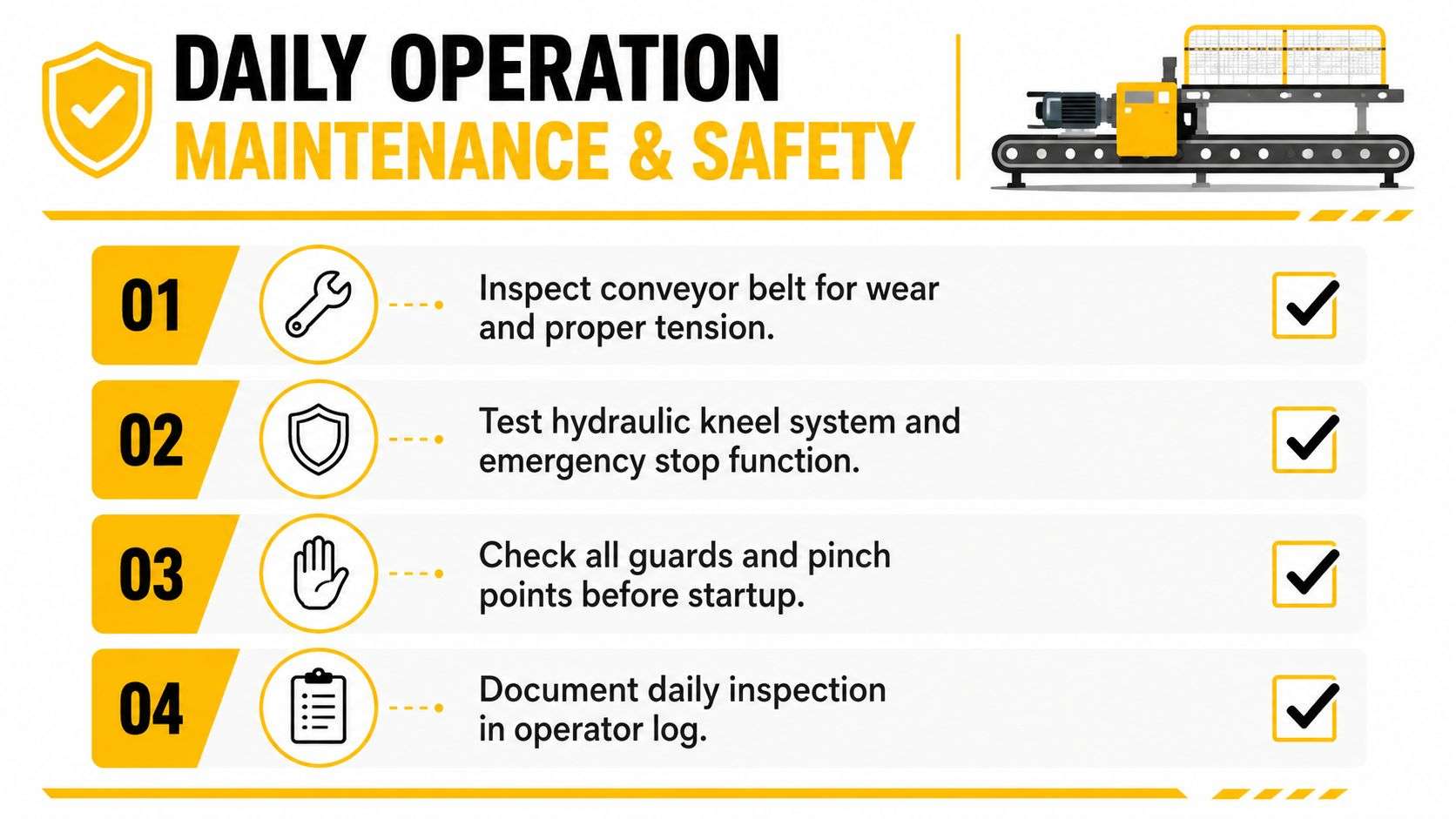
What to check before startup
A good pre-shift walkaround should focus on the conveyor belt, visible wear, and any debris lodged in the floor mechanism. If the belt looks loose, tracks unevenly, or shows obvious wear patterns, fix the issue before loading material. The same goes for the kneel function, if the trailer doesn't lower and rise cleanly, don't force the shift.
- Inspect belt tension: make sure the conveyor isn't slack or wandering before load-in.
- Clear debris: remove hardened material from the floor mechanism so it doesn't interfere with movement.
- Test the kneel function: verify that lowering and raising behavior is smooth and predictable.
- Check guarding and pinch points: look for anything that could catch clothing, gloves, or tools.
- Log the inspection: a written daily check helps you catch patterns before they turn into breakdowns.
How to think about loading and payload
The ANTS owner's manual states that payload is calculated by subtracting empty weight from GVWR, and it also notes that material density must be matched to safe cargo volume for safe operation ANTS live bottom. That's the loading rule to keep in mind every day. A trailer can be rated for a certain payload on paper, but if the material is too dense for the available volume, the safe load is lower.
Practical rule: weight rating is only half the story. Volume and density decide whether the load is actually safe.
If discharge looks uneven, the first suspects are usually belt condition, material buildup, or loading that isn't balanced across the bed. If the trailer hesitates when kneeling, that's a hydraulic problem until proven otherwise. Keep the checks routine and the fixes immediate, because a live-bottom trailer is only efficient when the operator trusts it enough to use it all day.
Dealer Support and Financing Options
Acquiring an ANTS trailer is less about chasing the lowest sticker price and more about getting a machine that fits the work and stays supported after delivery. The company's setup includes manufacturer-direct support for parts and troubleshooting, plus a growing dealer network for demonstrations and service, which helps when a crew wants to evaluate fit before committing.
Support and purchase path
The practical buying advantage is simple. If a trailer is going to live on a real jobsite, the owner needs a clear path to parts, answers, and service when the schedule gets tight. That support structure matters just as much as the steel does.
For buyers who want to work the numbers before they buy, the financing page at ANTS trailer financing options is worth reviewing alongside the model specs. Financing can make premium equipment more feasible without forcing a business to drain working capital in one shot.
Pricing context helps set expectations
The 7/12X Drop Deck has appeared in dealer inventory at around $18,500 with an MSRP of $19,500, which keeps the discussion grounded in what these trailers cost in the market dealer inventory listing. That matters because it confirms the positioning, these are premium, work-focused trailers, not basic utility units built to a lowest-price target.
If you're evaluating a live-bottom trailer for the first time, ask for a demo and inspect the loading geometry in person. A trailer can look straightforward on paper and still feel completely different once you see the kneel function, the belt operation, and the discharge control in a real work setting.
Making the Right Purchase Decision for Your Operation
A live-bottom trailer makes sense when the jobsite punishes a dump body. Tight access, soft shoulders, uneven pads, overhead clearance limits, and long placements all raise the cost of using a conventional dump trailer. The practical question is whether your crews are losing enough time to stuck loads, hand-shoveling, cleanup, and rehandling material to justify the change.
Start with the work pattern, not the brochure. If your loads need precise discharge, if you often unload on grades or in confined areas, or if spilled material creates a cleanup problem, the conveyor floor and controlled release are the features that matter most. If your work is mostly open, level, and fast-turn, a dump trailer may still be the simpler tool.
Use a short decision checklist before you buy. Ask whether the trailer will need to place material beside curb lines, into trenches, around existing structures, or on ground that is too irregular for a stable tip. Ask whether the crew can safely raise a dump bed in those conditions, or whether lowering the deck and feeding material out through the floor reduces risk. Ask whether the trailer needs to carry several material types, because wet aggregate, mulch, and demolition debris do not always behave the same way during unloading.
Capacity matters, but so does control. A trailer that carries the right payload on paper can still slow a crew down if the unloading method forces extra cleanup or creates a safety hazard at the point of discharge. The ANTS Live Bottom Trailer is built around that trade-off, with a conveyor floor, kneel capability, and a setup that suits constrained sites better than a traditional dump body. For buyers comparing models, the right filter is simple, match the deck length, payload needs, and unloading style to the worst site conditions you expect to face.
A practical comparison matrix helps keep the decision grounded:
- Choose a live-bottom trailer when the site is uneven, access is tight, or material must be placed with control.
- Choose a dump trailer when the ground is open, the load can be raised safely, and speed matters more than placement control.
- Choose the ANTS configuration that fits your crew size, material type, and typical haul length, then confirm the discharge path with a dealer demo.
That is the part many product pages skip. The trailer is not just a hauler, it is part of the unloading process, and the wrong format can add labor every time it leaves the yard. For a closer look at model details and configuration options, review the ANTS live bottom trailer product page and compare it against the actual sites your crew works, not just the easy ones.