
You're probably looking at the same problem a lot of fleet buyers hit. A crew needs to unload on uneven ground, under wires, beside traffic, or into equipment that can't tolerate a big uncontrolled dump. Traditional trailers still move material, but they also bring risk, wasted motion, and more cleanup than most operators want to admit.
That's where a live bottom conveyor trailer starts to make sense. It changes the unload from a gravity event into a controlled process. For contractors, municipal crews, landscaping professionals, and rental fleets, that shift matters because it touches three things that decide whether equipment pays for itself: safety, cycle time, and uptime.
This guide looks at the trailer the way an operator or fleet manager would. Not as a brochure item, but as a machine that has to work on rough jobsites, in changing weather, with real maintenance demands and real return-on-investment pressure.
Table of Contents
- The Safer and Smarter Way to Haul Materials
- How a Live Bottom Conveyor Trailer Works
- Key Advantages Over Traditional Dump Trailers
- Innovative Features Redefining Performance
- Top Applications and Industries Served
- Your Live Bottom Trailer Buying Guide
- Essential Maintenance and Safety Protocols
- Frequently Asked Questions
The Safer and Smarter Way to Haul Materials
A common jobsite scene goes like this. The truck is loaded, the ground isn't perfectly level, and the operator has to decide whether raising the box is worth the risk. Sometimes it works out. Sometimes the trailer leans, the material hangs, the driver has to creep forward, and everyone nearby gets tense.
That's the problem a live bottom conveyor trailer is built to solve. Instead of lifting the body to let gravity dump the load, it moves material out horizontally through the floor. The trailer stays low, stable, and predictable during discharge.
For a contractor, that changes the conversation from “Can we dump here?” to “How do we want to place the material?” That's a much better question. It opens up work in places where vertical clearance is limited, where soft ground makes tipping a bad idea, or where steady feed matters more than brute-force unloading.
Practical rule: If the unload area makes your operator hesitate with an end-dump, that's usually where a live bottom trailer earns its keep.
It isn't just the feeling of safety that provides value. It's that safer unloading usually improves workflow too. Crews spend less time repositioning, less time correcting piles that landed wrong, and less time dealing with stoppages caused by unstable dumping conditions.
A live bottom trailer isn't the answer for every haul. But when your jobs involve controlled placement, constrained access, or repeated unloading on mixed terrain, it's often the smarter machine.
How a Live Bottom Conveyor Trailer Works
The easiest way to explain a live bottom conveyor trailer is this: think of a grocery store checkout belt for gravel, mulch, or asphalt. The material sits on a conveyor built into the trailer floor, and the belt carries that material toward the rear at a controlled pace.

The belt does the unloading
In a live bottom design, the floor is the working system. According to Temisko's explanation of steel live bottom conveyor operation, these trailers use a recirculating rubber belt system embedded in the trailer's floor to discharge material horizontally. That same design lets the trailer unload on uneven ground without the tipping risk that comes with raising a tub. The same source notes that conveyor widths typically range from 25 to 63 inches, with 48 inches being a common standard.
That width matters more than many buyers realize. Belt width affects flow consistency, especially with materials that tend to bridge instead of moving cleanly. A trailer that looks fine on paper can become frustrating in the field if the floor design doesn't match the commodity.
If you want to see how manufacturers package that concept into a dedicated hauling platform, ANTS conveyor belt trailer models show the general layout clearly.
Why the hydraulics matter
The conveyor doesn't move itself. A hydraulic drive powers the belt and gives the operator control over how fast material leaves the trailer. That's why these trailers can feed a paver more evenly, spread material while moving, or meter discharge in tight areas where a sudden dump would create extra labor.
Hydraulic control also changes the operator's role. With a dump trailer, the event is mostly up or down. With a live bottom, the operator can manage flow as a process. That's a major reason these trailers fit paving, shoulder work, mulch placement, and municipal spreading so well.
Controlled discharge is what turns a trailer from a transport box into a placement tool.
The practical takeaway is simple. A live bottom trailer works because its floor, belt, and hydraulic system are designed to move product steadily instead of dropping it all at once. That's the core difference, and it drives almost every operational advantage that follows.
Key Advantages Over Traditional Dump Trailers
The strongest case for a live bottom conveyor trailer comes from the problems it removes. Traditional dump trailers still have their place, but they ask the operator to accept trade-offs in stability, precision, and site access. On many jobs, those trade-offs cost more than people expect.
Where live bottom trailers change the job
Safety comes first. When the trailer body stays down, the center of gravity stays lower during unloading. That matters on uneven pads, road shoulders, soft subgrade, and sites with overhead hazards. Crews don't have to gamble on whether a raised body will stay stable.
Precision is the next gain. End-dump unloading is fast, but it's blunt. A live bottom trailer can feather the stream, which helps when feeding equipment or laying a controlled windrow. That means less rehandling with loaders and less cleanup by hand.
Versatility is what usually closes the sale. Contractors run into tunnels, tree cover, utility lines, temporary structures, tight transfer yards, and sloped access points. A trailer that unloads horizontally can work in places where a tipped body can't.
Here's the practical comparison.
Trailer Comparison Live Bottom vs End Dump vs Belly Dump
| Feature | Live Bottom Trailer | End-Dump Trailer | Belly Dump Trailer |
|---|---|---|---|
| Unloading method | Horizontal conveyor discharge | Raised body with gravity dump | Gravity discharge through bottom gates |
| Stability during unload | High on uneven or sloped ground | Lower on uneven ground because body raises | Depends heavily on ground conditions and movement |
| Material control | Strong control over flow rate and placement | Limited control once material starts moving | Useful for spreading, but less precise in tight placement |
| Overhead clearance needs | Low | High | Low |
| Work in confined spaces | Well suited | Often restricted | Situational |
| Feeding paving or controlled placement operations | Well suited | Less consistent | Situational |
| Cleanup and rehandling | Often reduced | Often higher if pile placement is off | Varies by application |
For many fleets, the deciding factor isn't that one trailer type is universally better. It's that the live bottom trailer solves the expensive failures of the wrong tool on the wrong site.
A good example is ANTS live bottom truck and trailer configurations, which reflect how buyers are looking for equipment that can do more than just unload a pile.
If your crew regularly spends extra time fixing how material was dumped, the trailer isn't just hauling. It's creating labor.
Innovative Features Redefining Performance
A live bottom trailer earns its keep in the details. Conveyor discharge is the foundation, but the features around that system decide whether the trailer saves time every day or turns into another piece of equipment that crews work around.
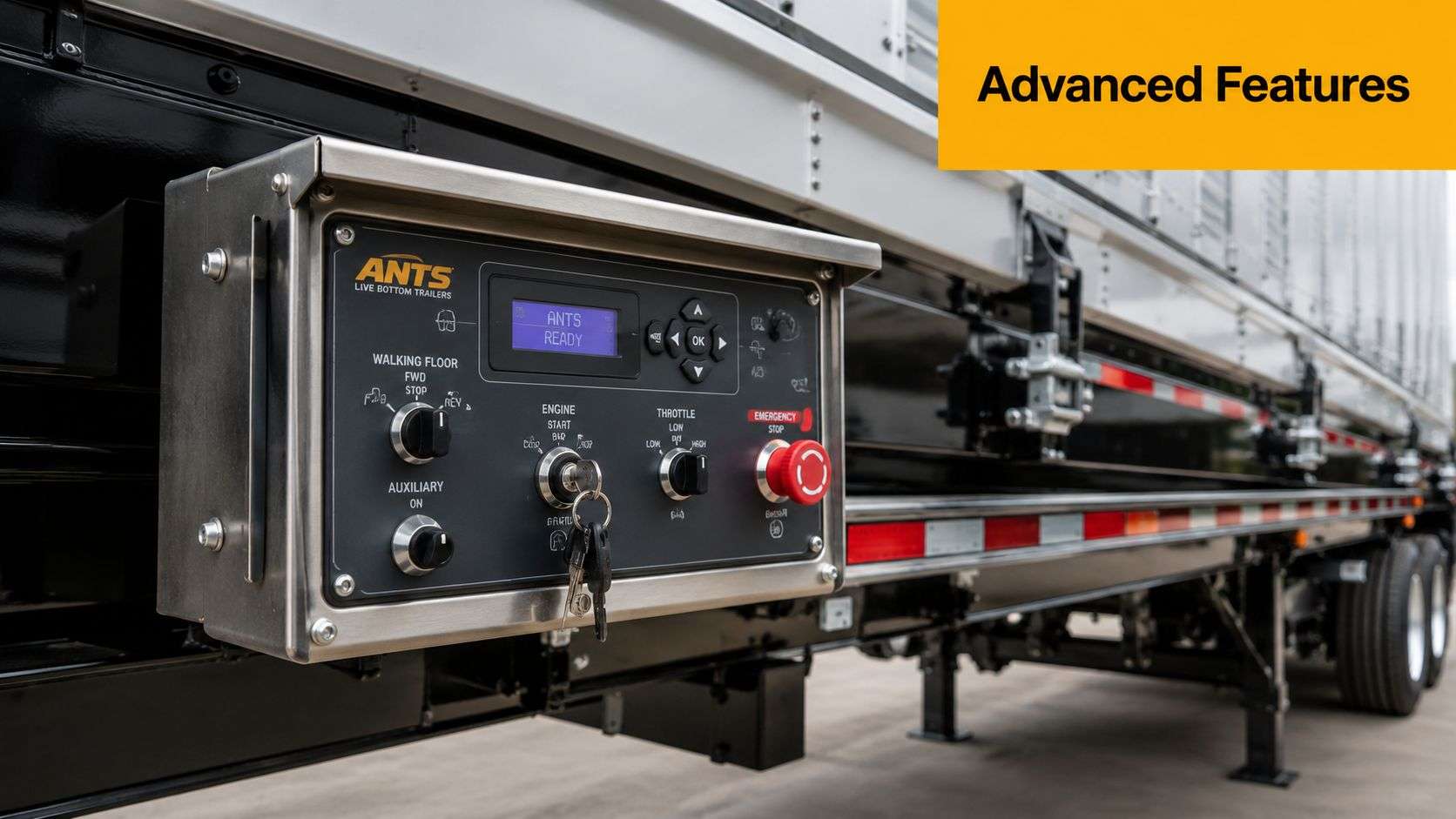
Features that solve field problems
Controlled discharge is still the first thing operators notice. A convey belt trailer bed lets the driver feed material at a measured rate instead of dumping everything at once. That pays off when placing aggregate along an edge, feeding a paver steadily, or unloading in an area where one bad pile means extra loader time and more cleanup.
Height adjustment matters too. The ability to lower or raise the trailer changes how the unit sets up on uneven ground, how it handles loading angles, and how stable it feels during unload. Contractors who work in subdivisions, patchwork road jobs, plant yards, and rural sites see that difference fast because ground conditions are rarely ideal.
Some fleets also overlook reversibility. On the better units, the conveyor can do more than just move product out the back in one direction. The ability to control belt movement with precision helps with placement, cleanup, and handling loads that do not always break free the same way in cold or wet conditions. That becomes more important in northern climates, where frozen fines, sticky mulch, or damp sand can expose weak controls and poor belt tracking.
ANTS Trailers gives a useful example of where the category is heading. ANTS Trailers are made in the USA in Baraga, Michigan, and their official trailer information page outlines a product approach centered on durability, versatility, a convey belt trailer bed, and adjustable trailer height. For a buyer comparing specs on paper, those features may look minor. In the field, they change setup time, unloading accuracy, and driver confidence.
Why build quality changes the math
Moving parts make money only when they stay aligned and easy to operate. On a live bottom trailer, the belt system, hydraulics, controls, and frame all depend on each other. If the frame twists, belt tracking suffers. If the controls are awkward, operators stop using the trailer's precision and go back to rough placement. If access for service is poor, small maintenance jobs get skipped until they become downtime.
Three build points separate a trailer that holds up from one that gets expensive after the warranty period:
- Floor and belt durability affect how well the trailer handles abrasive aggregate, recycled asphalt, compost, and other hard-to-handle loads.
- Control layout and responsiveness determine whether an operator can meter flow safely and consistently without guesswork.
- Frame alignment and structural quality show up over time, especially on rough haul roads, uneven loading areas, and repeated cycles under full load.
Security and control tie into performance too. A well-built trailer still loses money if tampering, theft, or poor site discipline put it out of service. Fleets that stage equipment on active jobsites can borrow from Overton Security's proven strategies to tighten access and reduce avoidable equipment risk.
The practical takeaway is simple. Buyers are no longer paying only for hauling capacity. They are paying for cleaner placement, fewer unstable unloads, better cold-weather behavior, and a trailer that keeps producing instead of sitting in the yard waiting on repairs.
Top Applications and Industries Served
A live bottom trailer proves its value on jobs where dump trailers create risk, wasted motion, or both. The best fit is not defined by industry label alone. It is defined by whether the crew needs controlled discharge, lower overhead clearance, and safer unloading on uneven or restricted sites.
As noted earlier, market projections point to continued growth in live bottom equipment across construction, agriculture, and waste-related work. That tracks with what fleets see in the field. More operations need material placed with control, not dropped in one shot.
Construction crews
Paving contractors were early adopters for a reason. Hot mix needs steady delivery, especially when feeding a paver, windrowing material, or unloading in areas where a raised body would be a bad idea. A live bottom trailer keeps the center of gravity low and lets the operator meter output to match the pace of the crew.
That matters on bridge approaches, under power lines, inside plants, and on sites with soft or uneven ground. Dump trailers can still do the job on open, level ground, but they bring more exposure when conditions are tight or unpredictable.
Contractors also care about what happens after the truck is parked. A precise trailer still sits on active jobsites where theft, tampering, and poor access control can put equipment out of service. Teams setting up storage and after-hours protection can borrow from Overton Security's proven strategies to reduce avoidable risk around high-value trailers.
Landscaping and sitework
Landscaping and sitework crews get paid for placement, not for building piles and cleaning them up later. Mulch, compost, topsoil, sand, and decorative aggregate often need to be spread along beds, trails, and prepared surfaces with less disturbance to finished areas.
A conveyor trailer helps the truck place material closer to final grade. That cuts loader passes, reduces turf damage, and lowers hand labor. On residential or municipal work, it also helps crews operate in places where overhead branches, fences, and tight access make a tipping body a poor choice.
This is also where load reversibility starts to matter. Some newer trailer designs, including configurations offered by ANTS Trailers, give operators more control over how material is discharged and managed during unloading. That flexibility helps when the crew is trying to correct placement without wasting time or contaminating the site.
Municipal and public works operations
Municipal crews work in traffic, on shoulders, around signs, and beside fixed infrastructure. They need equipment that unloads predictably and does not force the body up into a hazard zone. Live bottom trailers fit that work well, whether the load is aggregate, millings, salt, sand, or organic debris from cleanup operations.
Winter work adds another layer. Cold weather changes how belts, hydraulic response, and sticky material behave. Fleets that run year-round should pay attention to belt condition, ice buildup, and warm-up practices because a trailer that performs well in July can act very differently on a freezing morning.
Agriculture, recycling, and waste handling
These operations often deal with variable materials and mixed site conditions. One day the trailer handles grain or feed ingredients. The next it is moving compost, chips, sludge-related material, or sorted recyclables. Controlled discharge keeps the operation cleaner and reduces the shock load that comes with dumping everything at once.
The trade-off is straightforward. A live bottom trailer usually costs more upfront and asks more of your maintenance routine than a basic dump trailer. For fleets that unload in restricted spaces, feed processing equipment, or need safer placement around people and structures, the return comes from fewer unloading incidents, less rehandling, and more usable days across different jobs.
Your Live Bottom Trailer Buying Guide
Buying a live bottom conveyor trailer gets easier when you stop thinking in terms of brand-first shopping and start with workload. The right spec comes from what you haul, where you unload, and how much downtime your operation can tolerate.

What to spec before you call a dealer
Start with the material. Asphalt, aggregate, mulch, chips, grain, and mixed debris don't behave the same way on a belt. If the trailer will handle more than one category, spec for the harshest or most failure-prone material in your normal mix.
Then work through these decision points:
- Body size and access needs should match your routes and jobsites. A longer trailer may carry well, but it can also become awkward in cramped yards or urban work.
- Tare weight matters because dead weight is payload you can't use.
- Construction material should fit abrasion and duty cycle. Some buyers focus too much on initial weight savings and not enough on wear.
- Hydraulic setup needs to deliver smooth belt control under load, not just look good on a spec sheet.
- Support after the sale matters more than often recognized. Parts access and troubleshooting response can decide whether a breakdown is minor or expensive.
According to Etnyre's live bottom trailer specifications, key specs to evaluate include the hydraulic drive system, which can enable unloading in approximately 1/2 revolution of the belt, and unibody designs that reduce tare weight. The same source lists a typical 48-foot unit at around 11,000 kg.
What buyers often miss
The biggest buying mistake is treating every conveyor floor as interchangeable. It isn't. Belt design, tracking stability, cleanout behavior, and reverse capability all affect daily use.
A close second is ignoring how the trailer fits your operator skill level. Some fleets buy precision equipment and then give crews little training on flow control, gate management, or daily inspection. That leaves money on the table.
Use this short procurement checklist before signing:
- List your primary and secondary materials.
- Define your worst unloading conditions.
- Ask how the belt handles buildup and cleaning.
- Verify service access for hydraulic and wear components.
- Check support channels for parts and troubleshooting.
Buy for the work you actually do every week, not the occasional job that sounds impressive in a sales conversation.
Essential Maintenance and Safety Protocols
A live bottom trailer can be dependable, but only if the crew treats the conveyor system as a wear system, not a sealed box that runs forever. Most expensive failures start small. Poor tracking, packed material, neglected tension, or contaminated hydraulics usually show up before the trailer fails.
The checks that prevent downtime
Daily and weekly checks should be simple enough that operators will indeed do them. Focus on the items that affect movement, alignment, and hidden buildup.
A practical routine includes:
- Inspecting belt tracking so the belt doesn't start wandering and damaging edges or supports.
- Checking for material buildup under and around the discharge path.
- Watching hydraulic response for slower movement, unusual strain, or inconsistent flow.
- Cleaning after sticky or wet loads so residue doesn't harden into the next problem.
- Looking at wear points early instead of waiting for a visible failure.
Operators also need clear stop-work rules. If the belt begins pulling to one side, material stops moving cleanly, or the hydraulic system sounds strained, the trailer should be checked before the next load.
For brake and running-gear support, fleets that want parts and equipment service information can review ANTS brake and equipment resources.
Cold weather is its own maintenance category
Cold climates create their own failure pattern. According to Tide Industrial's guide to live bottom trailer belt technology, cold weather cracking and material packing beneath the belt are primary failure modes for rubber-based systems, and they can lead to unplanned downtime.
That means winter prep can't just be “grease it and go.” Operators in northern markets should pay closer attention to belt condition before first dispatch, remove packed material before it freezes in place, and avoid treating slow winter unloading as normal if the trailer is behaving differently than it does in warmer weather.
Safety procedures should match the same mindset. Keep the unload zone clear, use direct communication between driver and ground crew, and don't let familiarity replace discipline. These trailers are safer than tip-based unloading in many situations, but they still demand controlled operation and regular inspection.
Frequently Asked Questions
Can a live bottom trailer reverse material flow
Sometimes, yes. It depends on the design. According to Tracey Road's discussion of live bottom and shuttle floor operation, some systems with hardened rail structures can reverse material flow, which can reduce empty return trips and change the total cost of ownership. That feature isn't universal, so buyers should ask directly instead of assuming every trailer can do it.
How fast do these trailers unload
The useful answer is not “fast” but “controlled.” In field use, the goal is matching the discharge rate to the receiving operation or placement requirement. Where hydraulic design is strong, unloading can be very efficient. As noted earlier from the Etnyre specification source, some systems can unload in about 1/2 revolution of the belt, which tells you how quickly a properly designed floor can clear a load when conditions are right.
Are they suitable for asphalt and abrasive materials
Yes, if the trailer is spec'd correctly and maintained accordingly. Live bottom trailers are widely used where crews need continuous, controlled flow. They also handle abrasive commodities, but wear management matters. Buyers should pay close attention to belt construction, support components, and cleaning practices if the trailer will spend its life on rough aggregates or sticky material.
The broader question isn't whether a live bottom trailer can haul demanding material. It can. The better question is whether the floor, belt, hydraulics, and service support are matched to your actual workload.
If you want a trailer setup built for demanding material handling, uneven ground, and more controlled loading and unloading, ANTS Trailers is worth a direct look. Their lineup includes live bottom and other work trailer configurations designed and manufactured in Baraga, Michigan, with manufacturer-direct support that can matter just as much as the spec sheet once the trailer is in service.